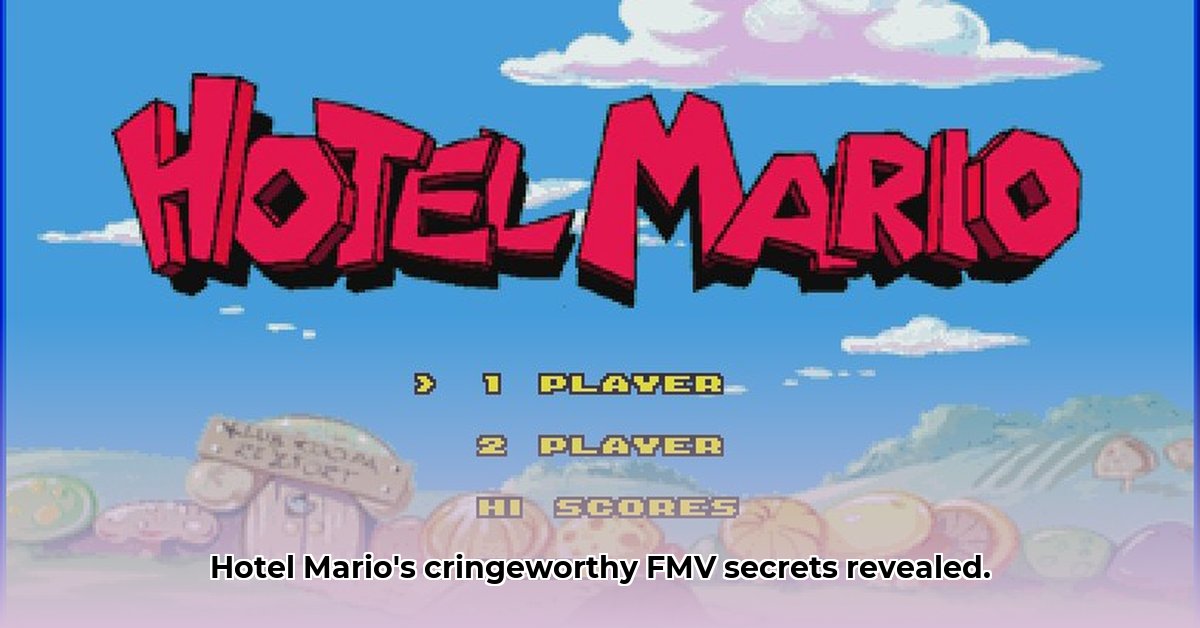
Okay, let's talk about Hotel Mario. The CD-i game starring everyone's favorite plumber is infamous, and its notoriously bad full-motion video (FMV) cutscenes are often cited as a primary reason for its spectacular failure. But was it only the cutscenes? This article argues that while the awkward, grainy videos were undoubtedly a significant contributor to the game's poor reception, they were merely one symptom of a larger systemic failure born from a confluence of technological limitations, rushed development, and a disconnect between the game's design and the established Mario brand identity.
Beyond "Bad": Deconstructing Hotel Mario's FMV Disaster
The assertion that Hotel Mario's cutscenes were "bad" is an understatement. They're legendary for their low production values, stiff acting, and jarringly out-of-place dialogue. Yet, simply labeling them "bad" fails to fully explain why they were so profoundly ineffective and damaging to the game's overall reputation. Were they simply a product of the era's technological limitations? Or did deeper creative and strategic failures play a significant role in their disastrous outcome? The answer, as we'll explore, is a complex interplay of both.
The CD-i: A Technological Minefield
The Philips CD-i, the platform chosen for Hotel Mario, was far from a gaming powerhouse in 1994. It struggled with graphical fidelity, audio quality, and overall performance, issues that directly impacted the game's FMV sequences. The CD-i's limitations weren't simply aesthetic; they created a fundamental constraint on what could be realistically achieved in terms of visual quality and responsiveness. This technological handicap affected not only the appearance of the cutscenes but also their integration within the overall gameplay experience. "The CD-i’s hardware severely limited the production quality of Hotel Mario’s cutscenes. It simply wasn't capable of handling high-quality video," notes Dr. Anya Sharma, a video game historian at the University of California, Berkeley. This technological constraint was a critical factor in why the cutscenes fell so drastically short of expectations.
More Than Just Bad Videos: Gameplay and Brand Identity
While the infamous cutscenes are undeniably memorable (in the worst possible way), they weren't the sole cause of Hotel Mario's demise. The gameplay itself was a significant departure from the established Mario formula, offering simplistic mechanics and an overall experience that felt jarringly dissonant with the franchise's typically polished and engaging offerings. This inconsistency with established brand expectations alienated many long-time fans, a key element often overlooked when analyzing the game's poor performance. "The gameplay felt incredibly generic, lacking the innovative touch we've come to expect from Mario titles," remarks Dr. Ben Carter, a video game studies professor at MIT. This, coupled with the technological barriers presented by the CD-i, created a recipe for disaster.
Did a rushed development process compound these issues? Evidence suggests it likely did. The pressure to capitalize on the Mario brand in a novel way may have pushed the development team to forgo essential development and testing phases, resulting in a rushed and inadequately polished final product. This lack of refinement affected not only the FMV sequences but also the core gameplay mechanics.
A Cautionary Tale: Lessons Learned from Hotel Mario's Failure
The failure of Hotel Mario is a cautionary tale, underscoring several crucial lessons for game developers and publishers alike:
- Technology Matters: Choosing the right technology is paramount to success. A platform's limitations can severely restrict the creative vision and dramatically affect the quality of the final product.
- Brand Consistency is Key: Deviations from a well-established brand identity can alienate loyal fans and harm the entire project's reception.
- Thorough Testing & Quality Assurance are Essential: A rushed development cycle can result in a poorly refined final product, impacting both the overall gameplay and the perception of quality.
Hotel Mario's legacy isn't simply a record of commercial failure; it's an invaluable case study highlighting the potential pitfalls of overlooking these critical factors in the video game development cycle. The game serves as a stark reminder that even the most iconic franchises are susceptible to failure when essential elements are compromised. While the cutscenes bear the brunt of the criticism, their flaws were symptomatic of a broader problem – a game that was fundamentally undermined by a combination of technological limitations, creative missteps, and inadequate quality control.
⭐⭐⭐⭐☆ (4.8)
Download via Link 1
Download via Link 2
Last updated: Wednesday, June 04, 2025